-2.jpg?width=1920&name=Business%20Joensuu%20-%20Menestyksen%20Mindset%20-kasvutapahtuma%20(17)-2.jpg)
Finland continues to attract a steady stream of international forestry professionals eager to learn from the country's world-leading expertise. During the past two years alone, approximately 300 international visitors representing more than 100 organizations have visited the Joensuu region. At the same time, these delegations generate significant revenue for the local tourism industry.
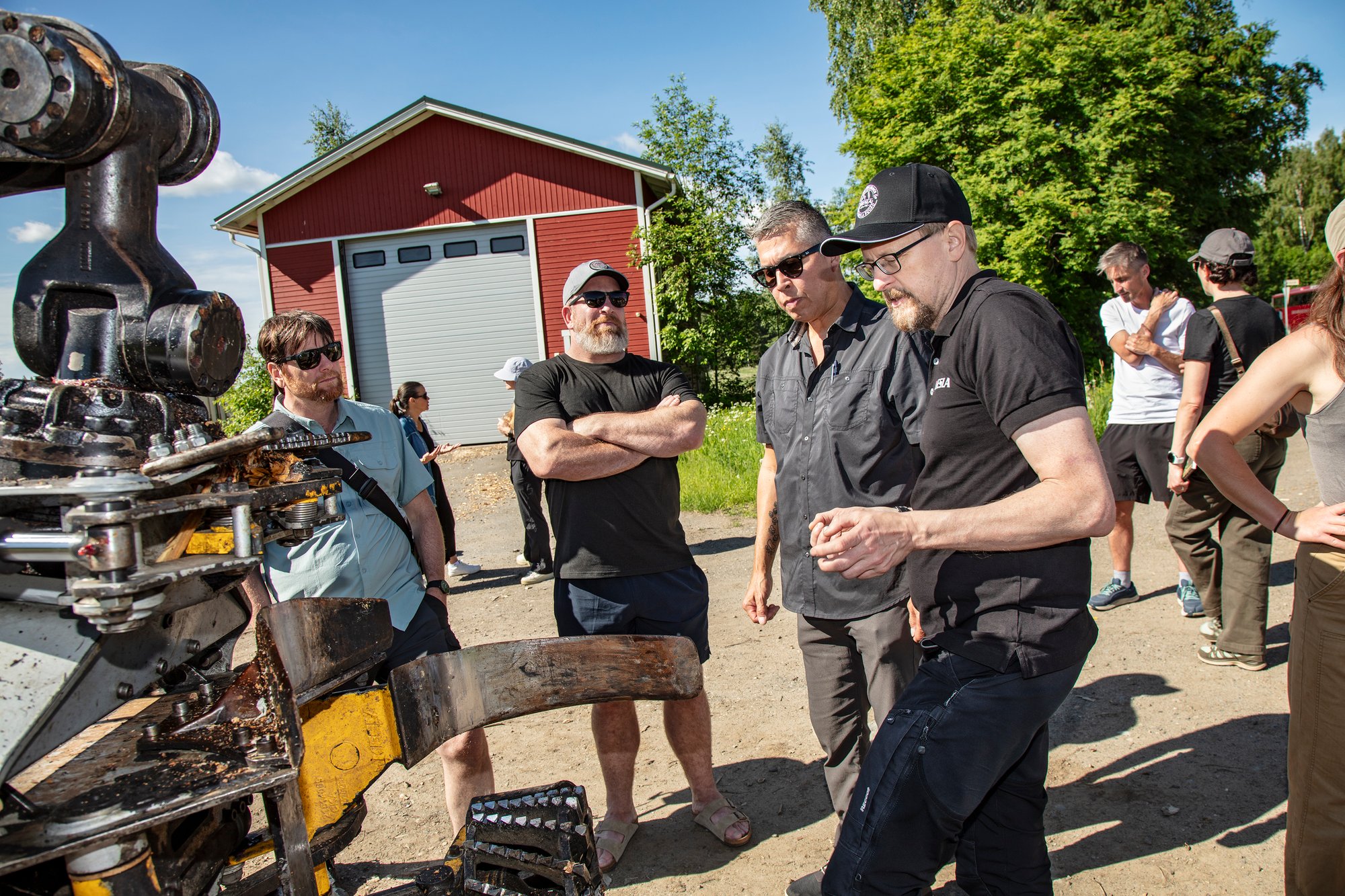
Visitors from Canada listen attentively as Mika Tahvanainen from Joensuu-based technology company Kesla and forest contractor Jyrki Hyvärinen explain Finnish timber harvesting practices in the village of Jakokoski, Kontiolahti.
The theme of the day is commercial thinning operations.
In Finland, first thinnings and other thinning operations accounted for nearly 70% of the total harvested forest area in 2024. In contrast, commercial thinning is rarely practiced in the visitors' home region of British Columbia.
"We're highly skilled at large-scale harvesting operations, but we need to learn how to make timber harvesting work efficiently in one-, two-, or three-hectare forest stands like they do in Finland. This is new to us," says forestry consultant Ken Day under the sunny skies of Jakokoski.
Three Years Later – The WhatsApp Group Is Still Active
Later in the day, the delegation hears presentations from experts representing the Finnish Forest Centre, the Natural Resources Institute Finland (Luke), Tornator, UPM, and Xpyro, a company specializing in forest fire prevention.
Throughout the week, the group—consisting of Indigenous representatives, researchers, forestry professionals, and harvesting specialists—attends dozens of presentations and visits two national parks.
"We are moving towards a new forest management model—one where the same forest area is revisited two, three, or even four times during a single rotation, and where individual stands are thinned more intensively than before," summarizes Dominik Röser, Associate Dean of Forestry & Environmental Stewardship at the University of British Columbia, describing the ongoing transformation of forestry practices in British Columbia.
Ken Day is back in Finland for his third visit. He has no hesitation in naming the biggest outcome of his previous trip three years ago.
"It created a strong sense of working together. Since then, we've updated our thinning guidelines, launched training programmes for forest machine operators, and developed professional continuing education. We still have a WhatsApp group where we support each other and work together to solve practical challenges," Day says.
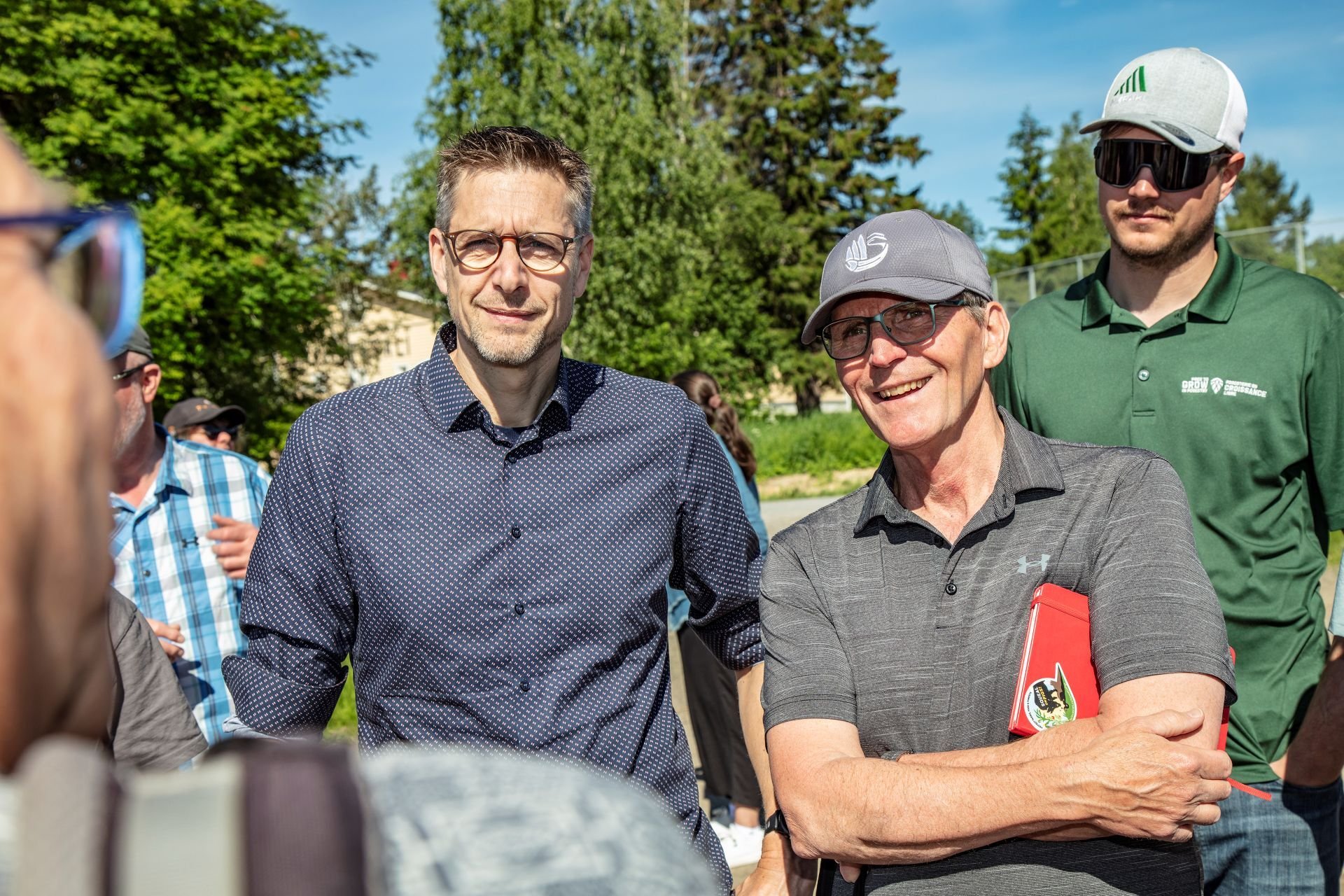
Associate Dean Dominik Röser (left) from the Faculty of Forestry and Environmental Stewardship at the University of British Columbia and forestry consultant Ken Day (front right) coordinated the Canadian study tour. The delegation included Indigenous representatives, researchers, forestry experts, and harvesting professionals. Photo: Harri Mäenpää / Studio Korento
Hundreds of Visitors – One Third from Asia
The Canadian delegation is not the only delegation of its kind. International forestry visits land on the desk of Business Joensuu Development Manager Ville Kortelainen almost every week.
Kortelainen plans the programmes and accompanies visitors as both host and guide, making it easier for international groups to organize study visits to Finland.
"During the past two years, around 300 international visitors from more than 100 organizations worldwide have come to the Joensuu region through our network. About one-third of the groups come from Asia," says Kortelainen.
According to him, visitors are especially interested in learning how Finland collects highly accurate forest resource data, how the data supports decision-making, what kind of machinery enables efficient timber harvesting, and how the different parts of the forestry value chain are integrated.
Joensuu's Forestry Expertise Attracts Global Interest
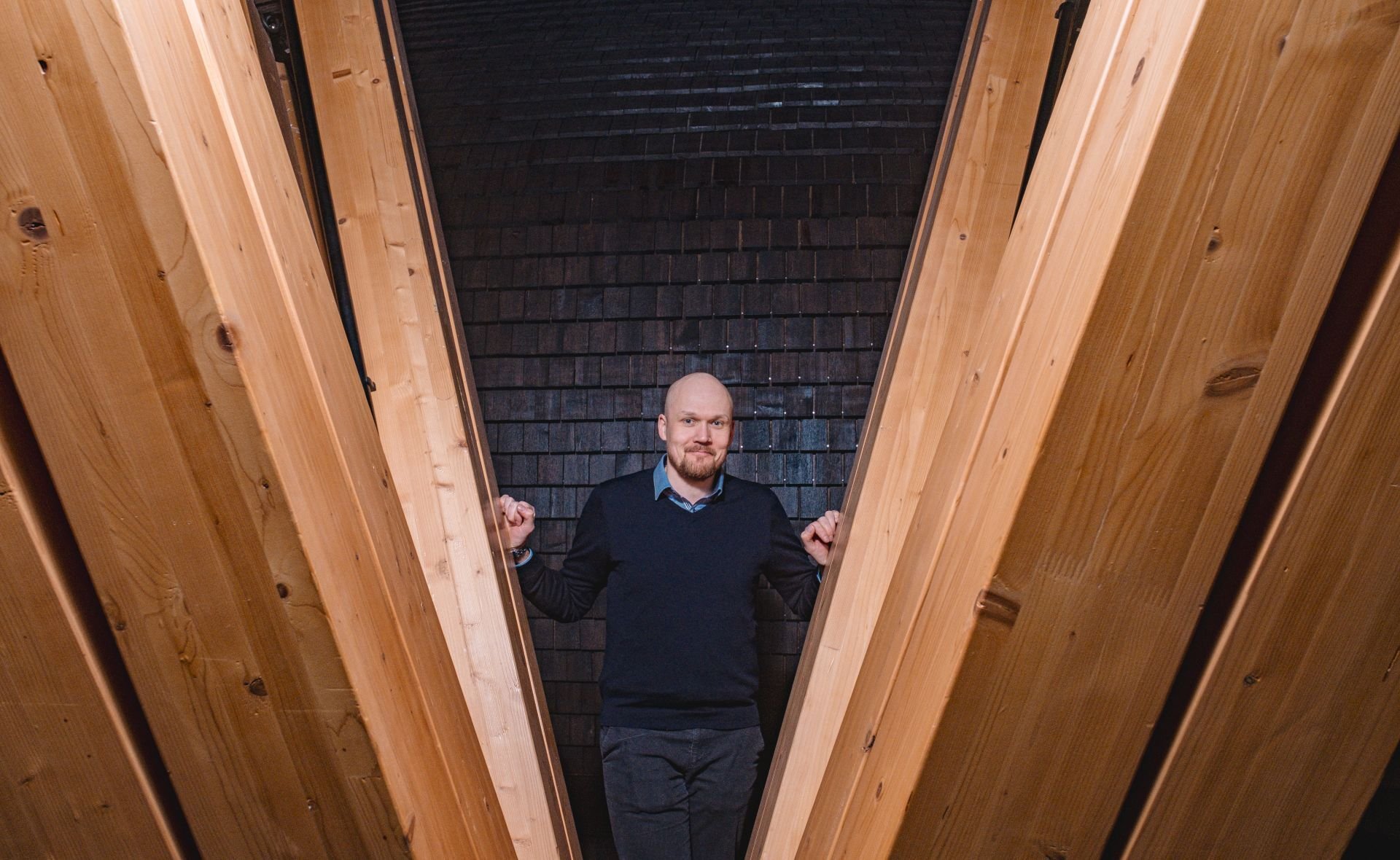
Ville Kortelainen, Development Manager at Business Joensuu. Photo: Tuomas Kinnunen
Business Joensuu's goal is to build connections between international visitors and local organizations.
The work is carried out within the EU-funded Forest Joensuu innovation ecosystem. Awarded the President of Finland's Export Promotion Prize, the network brings together companies, research organizations, and other stakeholders in the forest bioeconomy under a shared brand and collaborative ecosystem. It includes around 600 organizations employing approximately 6,000 people.
"In forestry, Finland is internationally recognized as a high-technology country. We've developed expertise here that is in demand around the world," says Kortelainen.
Forests and forest-based industries generate approximately €2.5 billion annually for the Joensuu region.
"There is still considerable growth potential. By welcoming forestry professionals to visit us and showcasing our expertise, we create opportunities to increase both tourism income and forestry exports."
One example of the economic impact of these visits was Europe's largest annual forest technology conference, held in Joensuu in the summer of 2025.
"It brought nearly 300 researchers and forestry experts from 27 countries. Through accommodation and other services alone, the event generated an estimated €300,000 for the local economy over just a few days."
More Than One Hundred Photonics Visitors
Another Joensuu's internationally recognized centre of excellence, Photonics Joensuu, attracts experts in micro- and nanophotonics as well as technologies used in applications such as e-readers and sports watches.
During the past year alone, photonics expertise has brought at least one hundred international visitors to the city, estimates Business Joensuu Development Manager Leena Lehikoinen.
"Companies come to explore opportunities for research collaboration, customer partnerships, establishing operations in the region, and finding solutions to product development challenges. In addition, many visitors arrive through the events and professional networks of researchers and professors," Lehikoinen explains.
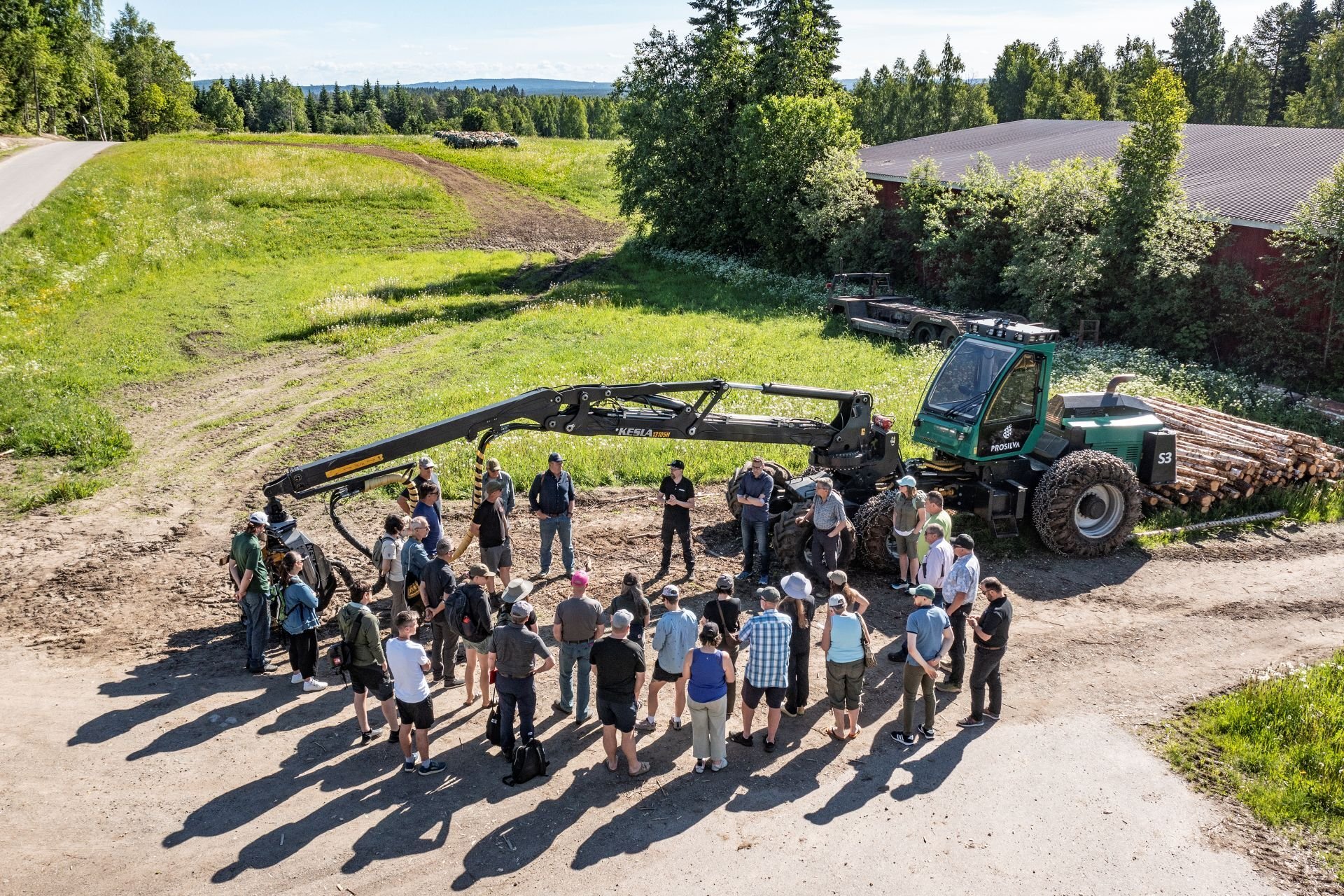
During the thinning-themed field day, the delegation heard presentations from experts representing the Finnish Forest Centre, the Natural Resources Institute Finland (Luke), Tornator, UPM, and Xpyro after visiting the harvesting operation. Photo: Harri Mäenpää / Studio Korento
According to both Lehikoinen and Kortelainen, visitors most frequently praise the ease of arranging the study tours and the concentration of expertise within a compact geographical area.
Dominik Röser agrees.
"In Joensuu, you can truly experience the entire forestry sector in one place."
Ken Day also praises the willingness of Finns to learn.
"What makes this especially valuable is that people are not only willing to share their own experiences but are equally eager to learn from us. At the same time, we have the opportunity to learn from them."
There is one subject, however, that the visitors prefer to avoid.
"We've tried not to talk too much about ice hockey. Wasn't Finland recently successful at our expense?" Ken Day laughs.
_________________________________________________________________________
Text: Heikki Hamunen
Lead photo caption: Mika Tahvanainen from Joensuu-based technology company Kesla demonstrates the harvester head of a forest machine to Canadian visitors at the family farm of forest contractor Jyrki Hyvärinen in the village of Jakokoski, Kontiolahti. In addition to the harvester, the visitors also toured the Kontio-Energia Cooperative's woodchip heating plant visible in the background. Photo: Harri Mäenpää / Studio Korento
This article was produced as part of the Innokaupunki 3 project, co-funded by the European Union and the Regional Council of North Karelia.
_________________________________________________________________________
Further Information:
Ville Kortelainen
Development Manager, Business Joensuu
+358 50 465 5434
ville.kortelainen@businessjoensuu.fi


-1.png?width=6912&height=1131&name=Nimet%C3%B6n%20malli%20(3)-1.png)