-2.jpg?width=1920&name=Business%20Joensuu%20-%20Menestyksen%20Mindset%20-kasvutapahtuma%20(17)-2.jpg)
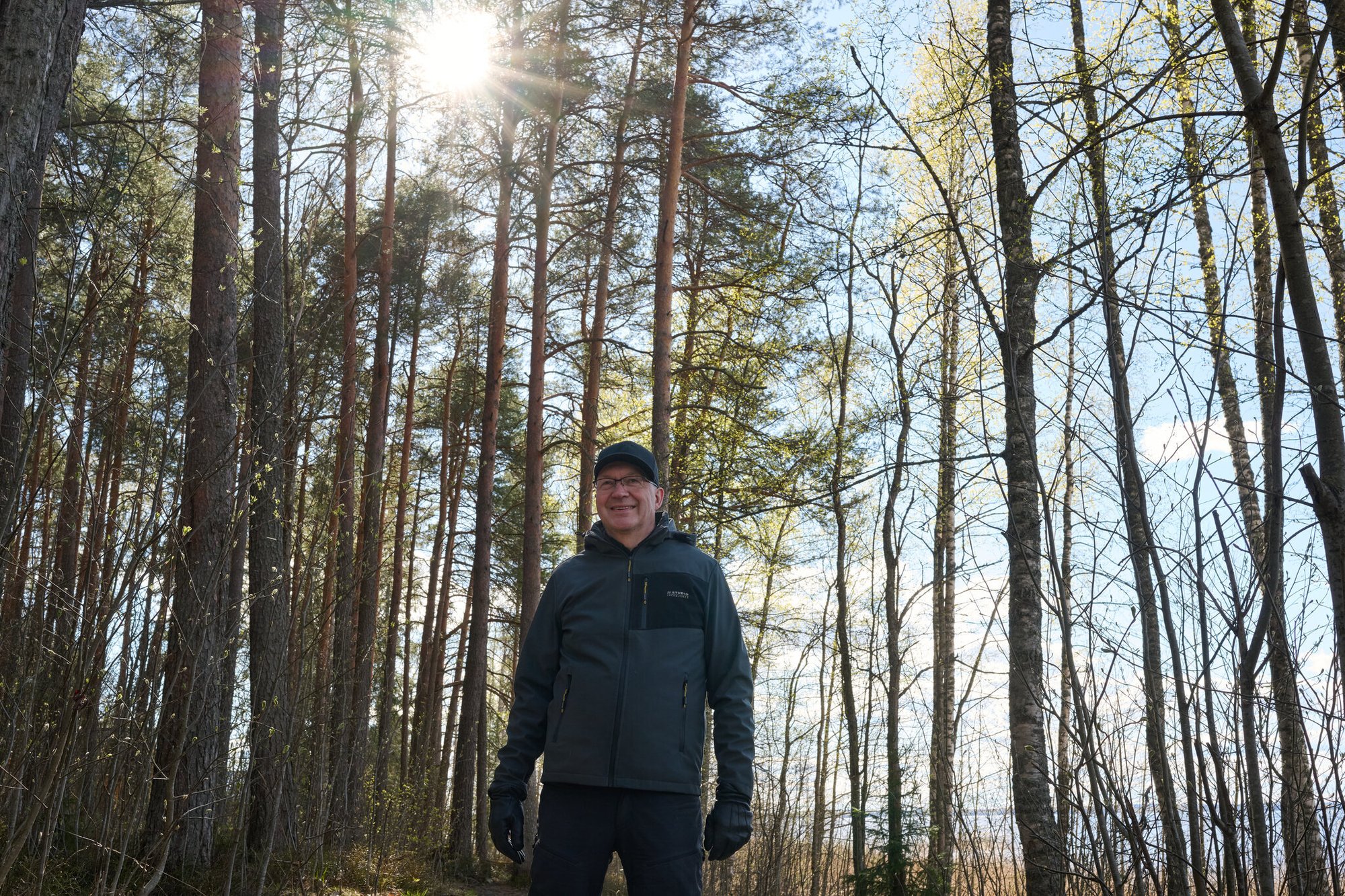
Forests are one of Joensuu’s most valuable resources. They offer research opportunities for researchers and new innovations for companies. In Joensuu, forest RDI activities open up pathways for the export of sustainable solutions and increase the city’s attractiveness as a target for investments.
Tree inventory using machine vision. Forest fire prevention through artificial intelligence. Testing new uses for biomass.
Joensuu’s forests serve many purposes. The city has recognised forests as a competitive advantage since 1982, when the Faculty of Forestry was established at the University of Eastern Finland. Today, it is reflected in RDI work, which has been promoted since 2023 under the leadership of the Forest Joensuu innovation ecosystem.
“RDI activities are a collaboration between the City of Joensuu, the research and education community, and companies. Forest Joensuu’s goal is to open up pathways towards new jobs. Our RDI activities rely on digital forest expertise, which is created at the interface between photonics and forests,” says Seppo Tossavainen, Head of Economic and International Affairs at Joensuu.
The aim is to generate research and business that is consistent with sustainable development. Unlike in the early 2000s, the added value of forest industry exports has decreased and, for example, pulp has moved from domestic mills to lower-value uses abroad. Therefore, the focus of wood processing has turned to valuable side streams, the utilisation of waste heat and biomass.
A biorefining research unit has been planned for Joensuu, along with research and piloting infrastructure. Tossavainen notes that this kind of piloting has previously been lacking in Finland.
“There is a lot of talk in Finland about increasing the added value of forests, but it has not yet been realised. Forest Joensuu is trying to create measures that promote this. We are not getting involved in the forest business ourselves, but we are trying to get companies involved through measures that enable them to do so.”
Forest everywhere
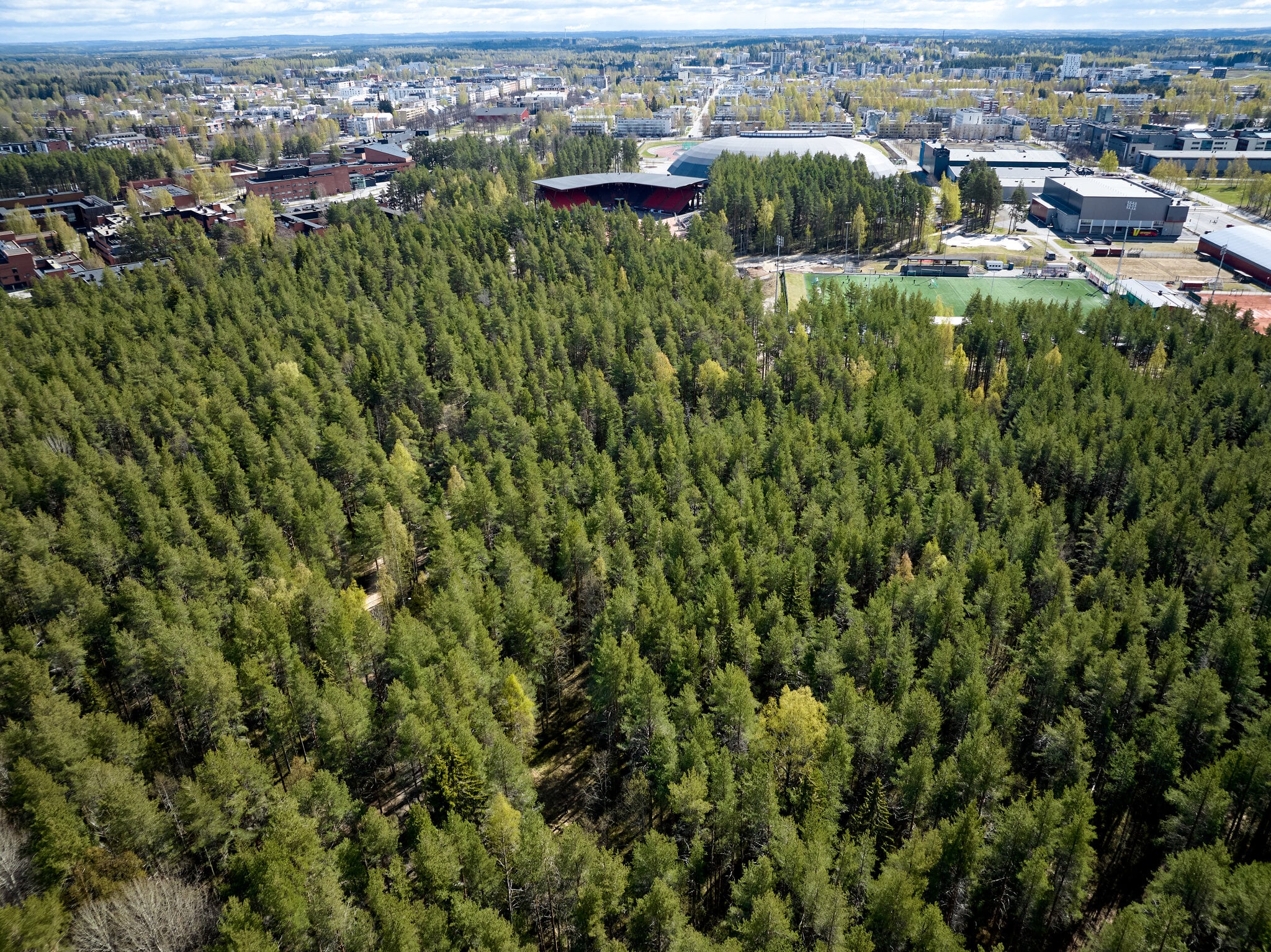
Caption: Mehtimäki area and university campus in Joensuu.
Joensuu is the fourth largest forest-owner city in Finland, owning 9,000 hectares of forest. According to the city’s Forest Work Supervisor Juha Lamminsalo, the area includes commercial and near-by forests, recreational forests, and nature reserves.
An example of the RDI opportunities of forests is the virtual learning environment for tree selection, or marteloscope, at Karelia University of Applied Sciences.
“There is forest everywhere in Joensuu, and the accessibility is good for RDI activities. On a case-by-case basis, it can be agreed with the city that, for example, an area like the marteloscope will be preserved for measurement use for a few years,” he says.
RDI work can also be related to research into continuous cover forestry. The Natural Resources Institute Finland (Luke) has had a continuous cover forestry project in Joensuu, in which the city was involved. The institute contacted the city and informed them about the project.
“Luke prepared the test areas, and the city cleared the continuous cover area. The forests have also been used for the Finnish Forest Centre’s training needs as part of continuous cover forestry.”
Lamminsalo points out that in Joensuu, RDI activities are always carried out on a case-by-case basis, on the terms of forest management and the research subject.
“We manage the forests in accordance with the city’s policies and the PEFC certificate. However, there are suitable areas, whether it is for continuous cover forestry or research into diseases and damage,” he says.
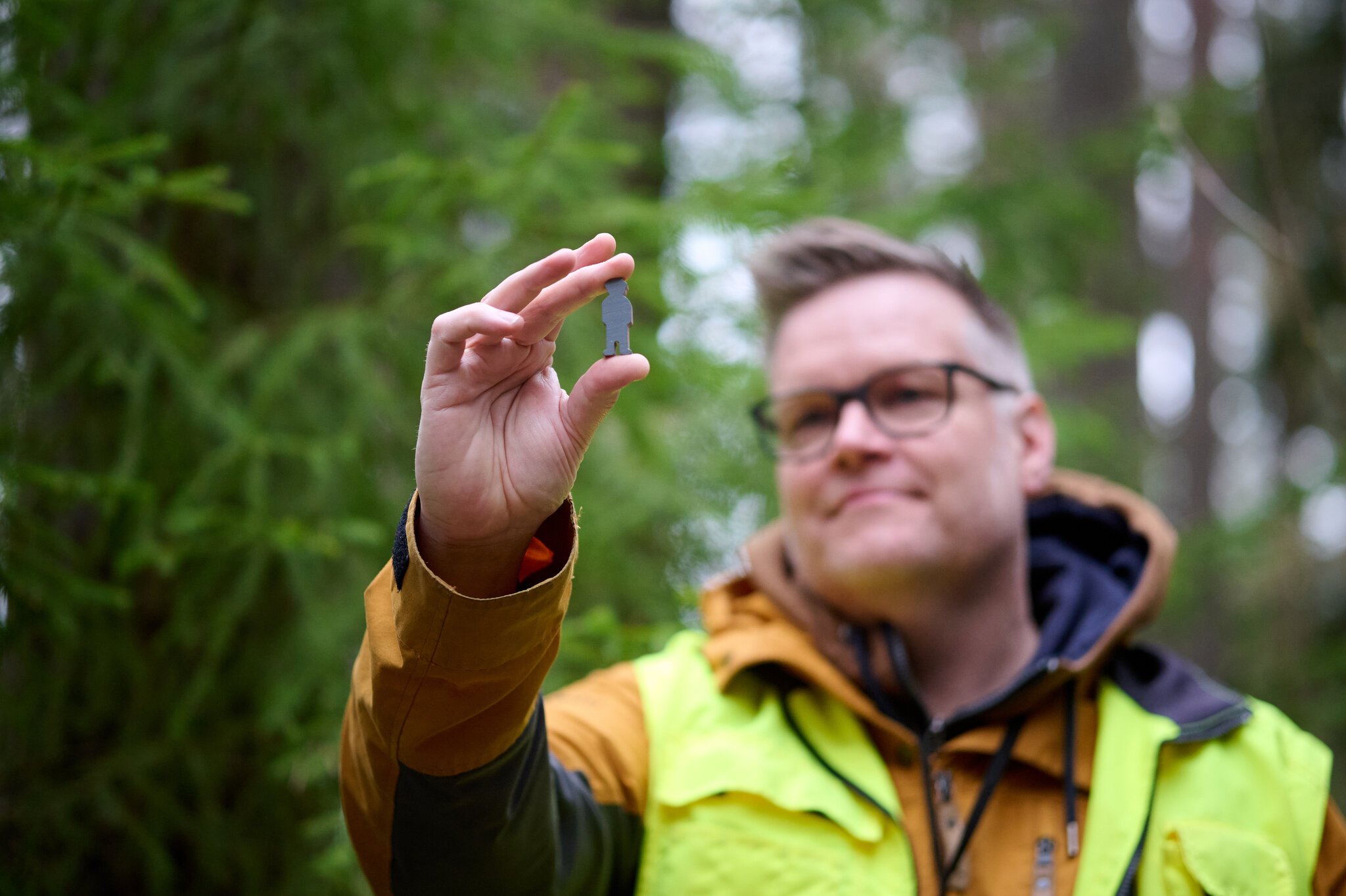
Caption: City’s Forest Work Supervisor Juha Lamminsalo
Scalable solutions for forest fire prevention
There is a high demand around the world for the knowledge generated by RDI work. According to Tossavainen, for example, very little is being done to prevent forest fires in Southern Europe and North America, where such fires are common. The best way to prevent forest fires would be to adopt Finnish forest management.
“In Joensuu, we can pilot practices that start with forest inventories. Data and artificial intelligence can be used to identify critical fire load locations, simulate a forest fire, and estimate its spread based on wind direction,” he says.
RDI activities also have broader development pathways. For example, forest fire prevention can reduce emissions globally.
“The greenhouse gas emissions from wildfires are greater than the emissions of any single country or industry. However, they are not registered as emissions because the reporting logic defines forest fires as natural, not human-caused. If we can also scale wildfire prevention to other places through RDI activities, it would have a huge climate impact.”
Precise information and modern methods
Joensuu’s strengths also include forest inventories. According to Tossavainen, Finland is the only country in the world where all trees thicker than an arm have an ID number.
“We know the species, length, and volume of each tree, as well as the size of its carbon stock. Exporting this kind of expertise to the world enables logging operations that produce wood material that is needed to make, for example, a specific valuable rocking chair,” he describes.
By exporting expertise to the world, Business Joensuu can also help international companies to develop. In Joensuu, the John Deere forest machine factory, which is the largest in the world in its field, sets an example. The machines manufactured there are paving the way for sustainable forestry through the cut-to-length method.
“Around the world, trees are often harvested from forests by using the whole-tree method, which is less efficient and more expensive than the modern cut-to-length method. When trees are harvested more efficiently and energy-efficiently, it is also in line with sustainable development. By spreading this method, we can bring jobs to Joensuu,” says Tossavainen.
More than just boards and pulp
Joensuu is trying to attract forestry companies to the city from both elsewhere in Finland and abroad. The Business Joensuu Invest In team is responsible for this work. Although the economic downturn has slowed down investments according to Tossavainen, the investments do not have to be large, and the work can start in a moderate manner.
“For example, a foreign investor could become a shareholder in a Joensuu-based company, with efforts then made for its growth. Instead of traditional large sawmills, it is more realistic for Joensuu to have several smaller companies that make wood into something that is more high-value than the current products.”
A valuable side stream is wood biomass, which can be offered to a modern biorefinery instead of it being incinerated. The city expects to find an investor for such a facility within the next 5–10 years, either from existing companies in Joensuu or from outside.
“In addition to traditional sawn timber products, such as boards and beams, wood could also be processed into other products, such as cross-laminated timber (CLT) panels, which are used in residential construction. There is not yet a single large-scale CLT factory in Finland,” Tossavainen points out.
This material has been produced as part of the activities under the City of Joensuu’s Innovation Ecosystem Agreement (ERDF), co-funded by the European Union and the City of Joensuu.
Main photo caption: Seppo Tossavainen, Head of Economic and International Affairs at Joensuu