
-2.jpg?width=1920&name=Business%20Joensuu%20-%20Menestyksen%20Mindset%20-kasvutapahtuma%20(17)-2.jpg)

NATO Testing Event Underway in Finland – Drone Startup Praises Testing Conditions at Kitee Airfield
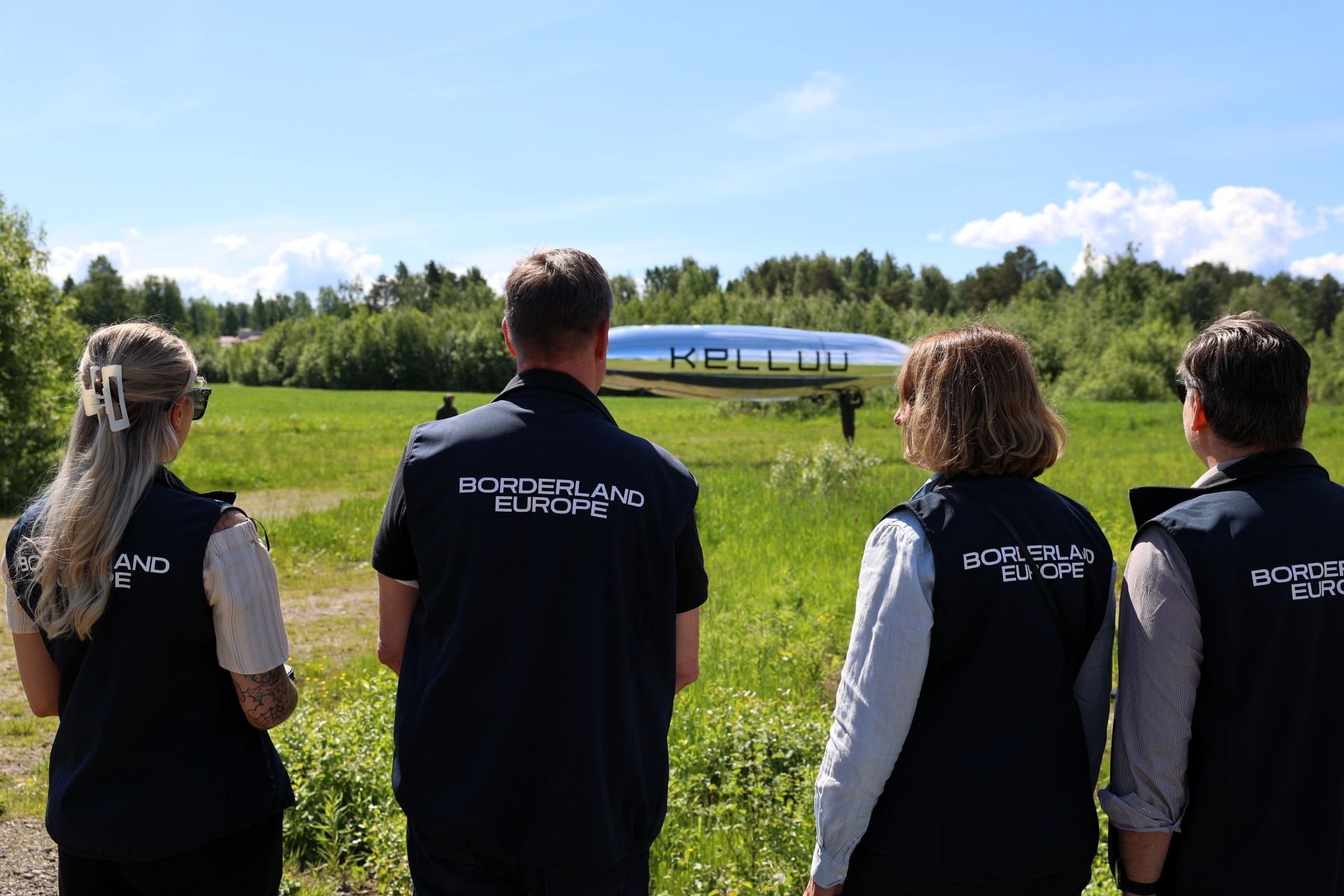
Finland’s role in NATO’s innovation and testing activities continues to grow. Dozens of Finnish and international defence technology companies have gathered in Finland for the NATO Innovation Range (NIR) event series.
The testing event series takes place from 1–10 June in Turku, Riihimäki, Joensuu and Oulu. The testing covers four technology domains: command and control systems, artificial intelligence and data solutions, communication technologies, and sensors. In addition, the counter-drone testing event LCI-X Crucible 2-26 is being conducted alongside the programme.
The goal is to ensure that technologies and military forces can operate together seamlessly.
“Collaboration among participants has been progressing well, and companies have provided very positive feedback already during the first few days. Defence technology development works best when developers are as close as possible to the end user,” says Ville Hietikko, Programme Director at the Digital Defence Ecosystem.
The Ministry of Defence of Finland serves as the national authority responsible for the testing events. The event series is organised, under the Ministry’s mandate, by the Digital Defence Ecosystem and DEFINE innovation ecosystems in cooperation with the Borderland Europe project, Business Joensuu, BusinessOulu and Business Turku. DEFINE is supported by the Finnish Innovation Fund SITRA.
“This is yet another significant step towards establishing long-term NATO-related innovation and testing activities in Finland,” Hietikko states.
“For Finnish companies, this is an opportunity to demonstrate their capabilities in realistic operational environments and to build networks with NATO stakeholders and international partners.”
“Kelluu: A Front-Row Opportunity to Demonstrate Capability”
The role of Joensuu-based airship company Kelluu during the testing event has been to help cover the border zone along Finland’s entire eastern border in cooperation with sensor manufacturers. Kelluu’s airships have operated in Sodankylä, Southeastern Finland and the North Karelia region.
“From Kelluu’s perspective, the testing has gone well, and we have flown in several locations. NATO collaborations provide front-row opportunities to demonstrate capabilities and increase visibility among a broader audience,” says Aleksi Sahlberg, Chief Operating Officer of Kelluu.
Imatra-based Rumble Tools, which provides situational awareness using drones, has been testing for several days at Kitee Airfield. During the tests, the company has monitored vehicles, people and aerial activity. Chief Operating Officer Pauli Jäppinen is pleased with the testing week and believes the objectives have been achieved.
Rumble Tools has conducted testing at dozens, if not more than a hundred, locations over the past ten years, and Kitee stood out positively.
"Kitee Airfield is an excellent testing location. First of all, it is a remarkably large airfield considering its remote setting. Adjacent to the airfield there is, among other things, a driver training track and a very large shooting range, which provides a wide variety of testing scenarios,” Jäppinen says.
Heikki Heliste, Project Manager of Borderland Europe, is pleased that testing activities in the Joensuu region have progressed according to plan.
“The Joensuu region offers excellent conditions for testing and validating digital border security products. We are located only about 50 kilometres from the Russian border, meaning that authentic positioning and radio-frequency interference from the east is always present, whether we like it or not. In addition, the region benefits from a strong research community through University of Eastern Finland and Karelia University of Applied Sciences. This is further supported by leading companies in their respective fields, particularly in photonics,” Heliste says.
“We Are Ready for the Actual Testing Operations”
Finland offers exceptionally diverse testing environments, ranging from the maritime conditions of Turku to NATO’s eastern border operational environment in Joensuu. Testing is also being conducted in Oulu in scenarios involving autonomous systems and long-range communications, as well as in Riihimäki in situations focused on the integration of command and control systems.
The overall programme, hosted by Finland and led by NATO’s Allied Command Transformation (ACT), is coordinated by Timo Salonen from Finland’s Permanent Delegation to NATO.
“The preparation phase of NATO’s LCI-X Crucible 2-26 operational experiment has been completed successfully. Earlier, we familiarised participating companies with the programme, conducted self-testing activities, and built the network connections and services required to support OPEX testing operations. We are now ready for the actual testing activities on Monday and Tuesday, when we will demonstrate NATO’s C-UAS and C2 capabilities,” Salonen says.
Further Information:
Ville Hietikko
Project Director, Digital Defence Ecosystem
Tel. +358 40 526 2899
Email: ville.hietikko@digitaldefence.fi
Petra Kaurisluoma
Director of Marketing Communications, Digital Defence Ecosystem
Email: petra.kaurisluoma@digitaldefence.fi
Annika Martikainen
Communications Specialist, Business Joensuu
Tel. +358 50 576 9437
Email: annika.martikainen@businessjoensuu.fi