-2.jpg?width=1920&name=Business%20Joensuu%20-%20Menestyksen%20Mindset%20-kasvutapahtuma%20(17)-2.jpg)
Outokumpu Mining Hub was established through projects funded by the Regional Council of North Karelia and the European Union to facilitate new innovations reaching the market. We bring together the best Finnish & circular economy technologies and build a service package that can benefit domestic and global mining operators.
The green transition requires cooperation and innovation
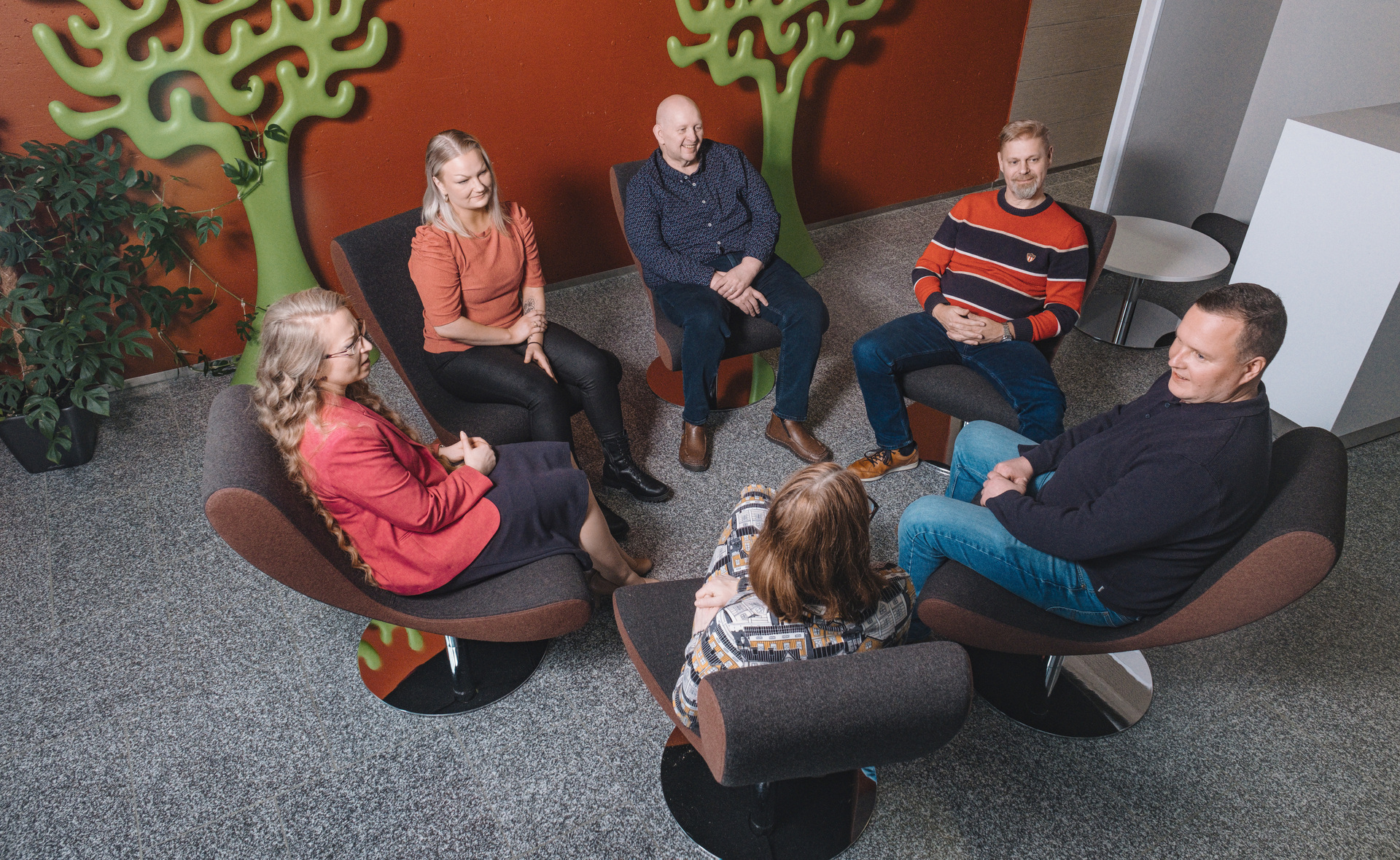
Business Joensuu and GTK together with companies have formed a cooperation network that develops and offers sustainable solutions for the future needs
of the mining and mineral sector, such as water treatment and recycling, and more efficient utilisation of waste rocks and tailings.
The core of the innovation cluster, Outokumpu Mining Hub, is located in Outokumpu. Extensive ongoing investment in GTK Mintec’s laboratory facilities, intelligent tailings research, and the digital development environment create a strong foundation for the cluster’s operations.
We are building a globally unique product development and business environment that utilises the special expertise of each cluster operator.
Outokumpu Mining Hub – evolving from a research facility for the Finnish mining sector to spearheading advancements in mining practices and technologies on an international scale
Mining in Outokumpu
Finland has had mining activities for almost 500 years, but it was not until the Outokumpu mine that the Finnish mining industry rose to a new level. During its years of operation, the Outokumpu mine became the most significant mining industry centre in Finland, around which the modern Finnish mining industry was born.
The discovery of the mine
The story of Outokumpu began in 1908 in Rääkkylä, when a large, yellowish stone was discovered while dredging the Kivisalmi shipping lane. A sample of this stone was sent to the Geological Survey of Finland in Helsinki, where it was found to contain a significant amount of copper. Mining engineer Otto Trüsted was assigned to search for the ore deposit. He concluded that the boulder had been dislodged from the ore deposit by the ice age and focused his investigation on the types of rock found in the boulder and in the surrounding area. After nearly two years of exploration, copper ore was finally discovered in Outokumpu.
Outokumpu's copper ore reserve was one of the largest in Europe. Over the years, nearly 40 million tons of ore were mined from it.
Starting mining operations
Outokumpu's first industrial ore processing plant was a copper mill that started operations in 1913. This mill transformed copper ore into ingots, wires, and nails. Initially, the mill faced challenges, which led to its temporary takeover by Norwegians in 1917. However, operations were returned to the Finnish management in 1921. The mine became entirely state-owned in 1924.
Outokumpu Oy experienced significant growth from 1930 to 1950, during which time it opened new production facilities across Finland. The Outokumpu mine remained the company's backbone, contributing nearly 90% of its copper production. The operations were expanded to include Mökkivaara and, in the 1950s, Keretti. Keretti became the second-largest copper mine in Europe in terms of size, and its 96-meter mining tower became the tallest in Europe.
Mining activities in Outokumpu lasted for 79 years, bringing significant benefits to the region. In 1945, the mine employed around 1,700 people, and by the 1960s, the town's population had grown to 12,000; however, all good things must come to an end. The last mine in Outokumpu, Keretti, closed in 1989. By that time, Outokumpu Oy had grown into a major international company.
After the mine
When the Keretti mine was opened, it was estimated that there would be enough copper ore to last for 25 years. However, the vulnerable industrial structure of Outokumpu posed a risk of job losses. As the ore reserves approached exhaustion, efforts began to identify potential replacement sources. As early as 1956, geology professor Pentti Eskola suggested that the future of Outokumpu lay in high-value processing industries.
In the 1970s, conditions were favourable for cooperation at local, regional and national levels, and preparations for an industrial park began. The establishment of an equipment manufacturing plant by Outokumpu Oy marked a significant milestone in the development of the industrial park. Regional policies and the city's active economic strategy successfully attracted companies to Outokumpu. Due to a determined development policy, Outokumpu's industrial park has been one of the most successful in Finland.
Outokumpu's legacy
Outokumpu served as the practical laboratory for the Finnish mining industry, where various methods for enriching ores and managing mining waste were developed, along with numerous other innovations. It can be stated that all Finnish mining education and research originated in Outokumpu. Additionally, GTK's current research and product development environment, GTK Mintec, was also established there.
In 1979, the Mining Localities Development Committee proposed that the VTT Technical Research Centre of Finland establish its enrichment laboratory in Outokumpu. By 1984, the mineral technology laboratory of VTT began its operations. In 1986, a geoanalytical laboratory owned by Outokumpu companies was completed. In 2004, VTT's laboratory was integrated into the Geological Survey of Finland (GTK).
Sources
Björn , I.; Immonen, L.; & Pennanen, M. (2000). Outo kumpulaisuus: kaivoskaupungin historiaa. Outokummun kaupunki.
Timonen, K. (2019). Murroksesta mahdollisuuksia. Tarinoita teollisuuskylästä. Outokummun Seudun Teollisuuskylä Oy 1979-2019. Outokummun Seudun Teollisuuskylä Oy.
Vanha Kaivos. (4. 12. 2024). Vanhakaivos.com. https://www.vanhakaivos.com/kaivosmuseo/museoinfo/outokummun-kaivoksen-historia
The origins of Outokumpu Mining Hub
Ilkka Nykänen, the former Development Manager at Business Joensuu, played a key role in the establishment of the Outokumpu Mining Hub from the very beginning. As such, he is the most qualified person to explain how the Outokumpu Mining Hub came to be. The information regarding OMH's early stages is based on an interview conducted in December 2024.
OECD Mining Regions and Cities
In 2017, the OECD held the World Conference on Mining in Chile, where the OECD launched the Mining Regions and Cities program. The initiative aims to improve the economic, social, and environmental well-being of areas affected by mining by sharing best practices and policy recommendations. The program is focused on gathering information and experiences from selected former and current mining regions to revitalise and promote the economy and well-being of these areas. It also aims to examine the importance of the mining industry to these regions.
Ilkka Nykänen, who was employed by the Joensuu regional development company Josek, proposed including Outokumpu in the program. The Outokumpu mine had closed in the 1980s. The city of Outokumpu had grown around the mine, as had the entire modern mining industry in Finland. A notable example is Outotec Oyj, which is now part of the Metso Group and provides technology for metallurgy and mineral processing to the global mining industry. "The area has a lot of potential and a rich history. The attitude towards mining is also positive. There are strong foundations on which to build a grand international vision," says Nykänen.
Nykänen informed the international representatives of the OECD about Outokumpu, and the proposal sparked interest. However, the successful implementation of the case study required local funding. While in Chile, Nykänen contacted Outokumpu's Mayor, Pekka Hyvönen, to present the idea. Hyvönen was enthusiastic and invited Nykänen to speak at the city council meeting.
"The council was a bit surprised and questioned whether I was serious about the OECD," Nykänen recalled. "They wanted to know what steps needed to be taken. I explained that they had to decide whether to participate and invest in the project." Ultimately, the council chose to join the initiative.
"We secured funding from Josek, the Regional Council of North Karelia, and the city of Outokumpu to initiate the "Outokumpu Case Study" process in collaboration with the OECD. Representatives from the OECD visited the site and conducted interviews with key stakeholders in the area. They explored the types of industries present and identified potential opportunities for development. Nykänen played a significant role in generating ideas and seeking out opportunities, drawing on his extensive local knowledge from his time at Stone Centre."
The report produced by the OECD included several recommendations for the region, which served as the foundation for the Outokumpu Mining Hub. These recommendations indicated that the region's development was sensible in a global context. Nykänen was invited to present before the board of the Geological Survey of Finland (GTK). "I informed them that this is a once-in-a-lifetime opportunity for Mintec," he said. The feedback from GTK was positive, leading to the advancement of the project.
Initially, the project was called Outokumpu Mining Camp
Thanks to the industrial park established in the area in the 1970s, Outokumpu has a diverse concentration of mining expertise in a small area. The core of the project, known as Outokumpu Mining Camp, consisted of FinnCobalt, GTK Mintec, the industrial park itself, and the Old Mine. In honour of the area's mining traditions, the project prominently features the name Outokumpu, which is globally recognised for its outstanding reputation and expertise in the mining industry.
At the same time that the Outokumpu Mining Camp was being launched, GTK began efforts to renew Mintec. These two processes complemented each other perfectly, creating a win-win situation where both GTK and Josek's successor, Business Joensuu, shared strong common goals. This alignment also resonated with the interests of the North Karelian Regional Council regarding the region's development. During this phase, the Regional Council played an active role as both a financier and a trustee.
"North Karelia has decades of research, development, and innovation (RDI) expertise in the mining industry," says Regional Director Markus Hirvonen. "We have cultivated this expertise through our mining operations, engaging with society rather than working in isolation. A strong value network has formed around this knowledge. It is crucial to scale and productise this expertise to export sustainable technology globally."
Hirvonen acknowledges the global challenges the mining industry is facing. "The sector is currently out of balance worldwide. We need more minerals than can be produced. Our mission is to facilitate sustainable mining practices that can develop globally to meet this demand. It is essential that we align ourselves with the right side of history. The work done by GTK helps us understand what constitutes sustainable practices," Hirvonen summarises.
In the initial stages of the project, efforts focused on building networks and fostering cooperation among European mining countries. The goal was to enhance collaboration, promote the mining industry, and improve access to metal resources. Ilkka Nykänen provides insight into the current state of European cooperation: "Currently, the networks and connections are very strong. We have also established a direct line of dialogue with the European Commission. One of Europe's key issues is increasing self-sufficiency in raw materials. At present, there are no other forums in Europe dedicated to improving the availability of mineral raw materials through coordinated cooperation among various regions."
From recommendations to tangible actions
The first case study, titled "Outokumpu and North Karelia, Finland," marked the beginning of the OECD Mining Regions and Cities case studies. It was presented in 2019 at the OECD World Conference in Skellefteå, Sweden, by Harri Palviainen, the CEO of Business Joensuu. It was significant not only for Outokumpu but also for the OECD, as it marked the beginning of the process, with concrete actions already being taken. "The challenge with large international projects is often to achieve tangible results and breakthroughs. However, this was not the case with this project; the recommendations in the final report were clear and practical," says Nykänen.
The OECD conference held in Darwin, Australia, outlined a roadmap for how and why the OECD should engage with the European Commission, as there was no cooperation at that time. Today, the collaboration between the EU Commission and the OECD is strong and genuinely beneficial for both parties. It is gratifying to see that this initiative has taken concrete form. I feel privileged to have contributed to significant initiatives that are important for all of Europe.
The extensive cooperation at both national and international levels has laid the foundation for the establishment and operation of the Outokumpu Mining Hub. With the Hub now in place, more specific details have been outlined. This initiative primarily focuses on the development and integration of business operations along with the processes necessary for a circular economy and a green transition.
A globally unique entity
At the heart of the Outokumpu Mining Hub is GTK Mintec's Outokumpu research unit, which features a state-of-the-art continuous pilot plant, and its own tailings area. The materials studied in this pilot plant can be processed for further research, such as in a mining environment. These studies help assess the efficiency of the enrichment process and the commercial viability of the mineral deposit. Additionally, Mintec is equipped to conduct laboratory-scale enrichment studies, mineralogical analyses, and mini-pilot studies.
Outokumpu Mining Hub has made investments in developing new value chains to enhance the utilisation of mining side streams. As a result, the Mining Hub collaborates with capable small and medium-sized enterprises (SMEs) that can provide innovative solutions to expand its comprehensive service portfolio.
The Outokumpu Mining Hub features a unique initiative that stands out even on a global scale. "Nothing like this has been done anywhere in the world. Several different operators are coming together to provide specialised expertise to the mining industry by combining various skills. Typically, operators work independently, offering individual services; for example, mining companies often have to source one component from Ireland and another from Canada. However, we are now able to provide all these services in one location, creating a high-level innovation environment for conducting various tests. Currently, no one else in the world can offer anything like this. We are truly creating something exceptional within an outstanding framework," says Nykänen.
From Juuka's Stone Village to the world map—developing North Karelia's mining industry
Ilkka Nykänen, the visionary behind the Outokumpu Mining Hub project, discusses how his career journey led to the establishment of this transformative initiative. He highlights the potential benefits the project can bring to the region. This interview took place in December 2024.
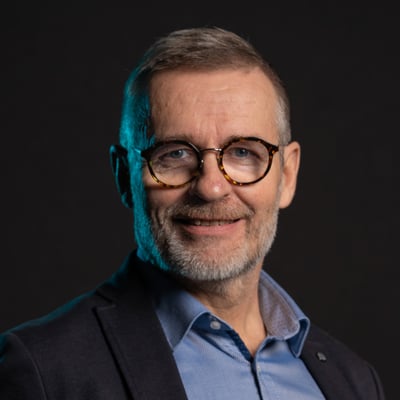
Ilkka Nykänen, who served as Development Manager at Business Joensuu until the end of 2024, has worked on the development of the North Karelian mining business for a quarter of a century. As the culmination of his long career, he has played a significant role in influencing the creation of a globally unique mining expertise cluster, the Outokumpu Mining Hub.
Nykänen has always had a passion for development work, and he says that he's easily excited by new challenges. As a result, he usually finds himself doing something that has not been done before. "I have sought out things that are not completely clear, but more on the level of thought."
During his career, Nykänen has participated in numerous projects and studies related to various materials. "I can't remember individual projects, there are so many! During the Stone Centre, we studied various composite materials in connection with the production of Tulikivi. During the early years of Josek and Business Joensuu, we built a large framework related to the industry's operating environment and created a shared European network.
Developing the Finnish Stone Centre
Nykänen is a civil engineer by training, but he ended up in the mining business in 1999, when Tulikivi Corporation founder, Teollisuusneuvos (Finnish honorary title) Reijo Vauhkonen, and the then Rector of the University of Joensuu, Paavo Pelkonen, contacted him. Vauhkonen asked Nykänen about his willingness to develop the Finnish Stone Centre. "It sounded like a job for me, since no one really knew exactly what to do and how to proceed," Nykänen laughs. The Finnish Stone Centre project aimed to promote the Finnish stone industry, as the location of Kivikeskus in Juuan Nunnanlahti is renowned for its stone heritage. Nunnanlahti is home to Finland's largest soapstone concentration, and two well-known Finnish fireplace manufacturing companies operate in the area: Tulikivi Corporation and Nunnanlahden Uuni Oy.
Ilkka ended up running the Finnish Stone Centre for 12 years, most of which he spent as the CEO of Stone Pole Oy, which was responsible for the Centre's operations, and as a representative of the Finnish Stone Research Foundation. The mission of the Centre was to develop the extractive industry, to promote stone research and marketing, and to attract new companies to the area.
Ilkka was responsible for managing the entire process: the accreditation of the stone research laboratory, the development of its operations, and the planning and organisation of the Finnish Stone Centre's annually changing exhibitions. The preparation and management of stone industry development projects also required a significant amount of working time. The work was intensive and enjoyable, but also demanding. Due to the economic downturn, the Finnish stone industry faced challenging times, which also made the operations of the Stone Centre more difficult and ultimately led to its closure in 2012.
From the Stone Centre to the extractive industry
Running the Stone Centre had given Nykänen the impetus to become more familiar with the challenges and opportunities offered by the extractive industry. After Kivikeskus ceased operations, he contacted Pekka Nuutinen, then CEO of Joensuu Region Development Company Josek. Nykänen says he said to Nuutinen, "Have you thought that the extractive industry could be significant in North Karelia in the future? Could this be an area in Josek that we could promote?" Nuutinen was excited by the idea, and so Nykänen ended up working for Josek, later Business Joensuu.
"From then on, I set out to build and lead industry development projects to get new companies involved in the extractive industry value chains. At that time, value chains and ecosystems were not yet the "fashionable terms" they are today. Still, the goal was the same: to offer small and medium-sized companies new business opportunities in the industry's value chains. The Regional Council of North Karelia supported the work by granting project funding to develop the necessary operating environment. Gradually, international projects also came along, for which Josek applied to be a partner. These projects established an invaluable international network, with which we continue to cooperate today.
The next logical step was to intensify cooperation and apply for the EU's Smart Specialisation process. Smart Specialisation is an innovation policy concept that builds on the existing and identified strengths of regions to develop new growth, business and innovation. North Karelia identified the extractive sector as one of its areas of specialisation, and Josek applied for Community status. The application, supported by the Commission, paved the way for integration into European cooperation and participation in major new European projects.
"I led the European cooperation forum between mining regions for three years in collaboration with Kristiina Jokelainen of Smartnorth Oy, an expert in mining partnerships," Nykänen says that she learned a great deal from Kristiina, including how EU funding mechanisms work and the preparation of large-scale projects.
Starting blocks for Outokumpu Mining Hub
In 2017, OECD launched the Mining Regions and Cities program at the OECD World Conference in Chile, with the mission of improving the economic, social and environmental well-being of mining-specialised regions by sharing good practices and policy recommendations. Nykänen was also present in Chile and had the idea of offering Outokumpu to the program. "The region has much potential and a strong history. The attitude is also positive for mining. There were good elements at play from which to build a big international vision," Nykänen says.
With the help of local funding, an "Outokumpu case-study" process was launched with the OECD. The result was a report in which the OECD presented several recommendations for the region. These recommendations served as the starting point for the Outokumpu Mining Hub, as well as a strong support for the region's development, being seen as sensible in a global context.
"This is related to my favourite idea: you have to think globally, but act locally. The OECD recommendations take a broad perspective, but challenge local actors to address the question of how to implement them. We have worked on that principle, and we must continue to do so. If we only play in district competitions, then those are completely different projects. However, if we want to have an impact, what we do must be international and global, and we must be able to respond accordingly. This is what is now being done at GTK Mintec and Outokumpu Mining Hub. We can honestly say that we are among the world's leaders in this regard."
Nykänen sees the Outokumpu Hub as a significant project for the region. "This is a golden opportunity for North Karelia. We can cope with expertise that is particularly relevant to the hot issues of the mining industry in terms of environmental responsibilities." The Regional Council also recognises this; the added value produced by the Outokumpu Mining Hub and GTK Mintec together is one of the region's top projects.
Additionally, the unique collaboration between GTK and Business Joensuu adds exceptional value to the region. "Business Joensuu's bread and butter is an understanding of the business interface and business, while GTK's is an understanding of the earth's crust and process technology. In this project, we have combined our efforts in such a way that together we produce added value that no one person can achieve alone. All parties are implementing the region's mining strategy. The North Karelian Regional Council is heavily involved as a co-financier, as its task is regional development, and this is regional development at its best. Business Joensuu, GTK and the North Karelian Regional Council have formed an alliance that has worked exceptionally well. It can be said that everyone has won."
North Karelia's success factors
Nykänen also finds special features and success factors in North Karelia. "The essence of the special feature is that we are good at this on a world-class scale. We have promising mining projects that can benefit from our expertise and experience. Collaboration can arise with these projects. For example, a new cobalt mine that produces cobalt as a primary product. It is located right next door to Mintec and can bring a lot of added value in both directions: product development and innovation."
"Another special feature is that the mines are not megalomaniacally large, but on a human scale. It is simple to influence both the actions taken and the tests conducted—the potential lies in the fact that all of this requires labour. The University of Eastern Finland (UEF) has launched a Master of Science in Engineering program that also incorporates expertise in mineral technology. Hopefully, new engineers will emerge there who can utilise the frameworks of the Outokumpu Mining Hub and Mintec. We will attract new talent and bring in new expertise. We also hope that Riveria Vocational School will continue to train miners."
"I would put my hope in the fact that what we are doing will develop and attract more players to the emerging ecosystem, and in particular that it will create new entrepreneurial business opportunities for companies involved in the value chain. Of course, I also hope that the mines will thrive and succeed. This belief and hope are based on the fact that it is quite clear that the world needs more critical minerals and speciality metals, for example, for the battery industry and the green transition."
What does the future bring?
"This is not a short-term cyclical trend, but a long-term thing. Developing raw material self-sufficiency will be a long-term investment for the EU. This expertise will also be in high demand. For us, the key thing is knowing how to utilise all this potential. Considering the region, my message is that we should discuss the matter more closely with the key actors in the region. Business Joensuu, the City of Joensuu, GTK, and the Regional Council of North Karelia should collectively agree on the big picture and what they want to achieve in five to ten years. They should then decide and create a strategy to achieve this goal. In addition, we need to agree on resources, where to find experts and funding, and what the role of each actor is in this whole thing."
"It is important to form a state of will about what role we want to play in the future in relation to future trends in the extractive industry. We must leverage our existing strengths and recognise the emerging potential in the region, which will be crucial for our future success."
"Ultimately, I feel fortunate to have participated and contributed to this development process. All generations strive to do their part in common matters. I have been able to participate in this part of the journey, where Outokumpu Mining Hub has reached this stage. I believe that my successors will take OMH to the next stage. This is a long-term and large development project that will hopefully put the region on the world map in a positive spirit of trust and a high profile of expertise."
"I am satisfied, grateful and privileged, and I am happy to spend my retirement days pursuing the pleasant hobbies for which I have little time in working life. I wish you a good journey on the next leg. I will be happy to follow how OMH develops and moves forward."
Mining Industry in Today's Finland
Finland currently has around forty operating mines, along with several deposits that are being explored. These mines extract both base and precious metals, as well as various industrial minerals. Approximately a quarter of the mines are dedicated to metal ore, while the majority focus on industrial minerals. The industrial mineral mines include carbonate mines, stone mines, soapstone mines, and gemstone mines.
Promoting metal recycling is important; however, the demand for metals in society currently exceeds the supply of recycled metals. As a result, mining will continue to be necessary. The availability of many critical metals is expected to become increasingly challenging in the coming years. Therefore, achieving self-sufficiency in raw materials will require a long-term investment in the European Union, as ensuring access to various metals is crucial for maintaining supply security.
Finland is a significant producer of several critical metals and has the capacity to supply all the essential minerals needed for battery production. Over the years, the country has built strong research and industrial expertise in this field and has established equipment and technology companies that operate in global markets. Finland is also continually improving its occupational safety and environmental practices in the industry. This makes it more responsible to produce mining products in Finland compared to countries with less stringent legislative guidance.
North Karelia as an operating environment
The Joensuu region offers companies growth, experts and networks. Along with the mining industry, the top sectors of expertise in our area include forest bioeconomy, photonics, the metal and plastic industry and ICT. The region is abundant in natural resources, with 89% of its land area covered by forests. Forest resources in the region support a diverse range of businesses focused on the forest bioeconomy. Over 30 considerable investments are planned to accelerate the green transition in the area. These initiatives include, among others, a biochar plant, a green hydrogen production facility, a biomethanol plant, and numerous solar and wind power projects.
Joensuu is one of Finland's largest student cities, where future top experts graduate from all levels of education. Several educational institutions support research, development, and innovation (RDI) activities in the area, including the University of Eastern Finland and Karelia University of Applied Sciences. Notable research organisations in the region are the Natural Resources Institute Finland, the Geological Survey of Finland, the Photonics Centre, and the European Forest Institute (EFI).
Business Joensuu offers extensive services at all stages of business activities - from smooth relocation to growth and internationalisation. Companies estimate that Joensuu is one of the most entrepreneurial cities in Finland. Check out the opportunities in the region and make sure that Joensuu is the right location for your company!